Spring Rain Is Beautiful — But It’s Feeding the Algae on Your Home
Chapel Hill’s spring season brings warmer temperatures, longer days, and steady rainfall — and while all of that is great for your garden, it’s also the ideal environment for algae and mildew to take hold on your home’s exterior.
If you’ve noticed dark streaks on your roof, green patches on your siding, or a slippery film on your walkways, you’re not imagining things. Spring is the most aggressive season for biological growth on home surfaces in central North Carolina, and the longer you wait to address it, the harder and more expensive it becomes to remove.
Why Spring Is Peak Season for Algae and Mildew in NC
North Carolina’s spring weather creates a near-perfect recipe for exterior biological growth:
- Consistent moisture from April and May rainfall keeps surfaces damp for extended periods
- Rising temperatures (but not yet the intense summer heat) create warm, humid conditions that accelerate mold and algae growth
- Post-winter debris — leaves, dirt, and organic matter left over from fall and winter — provides nutrients for biological growth
- Shade and tree canopy, common in Chapel Hill neighborhoods, keeps surfaces damp longer and reduces the natural drying effect of sunlight
The result? Algae, mildew, mold, and lichen that can appear seemingly overnight on roofs, siding, driveways, decks, and retaining walls.
How to Identify Algae vs. Mildew vs. Mold on Your Home
These terms are often used interchangeably, but they’re different — and the distinction matters for treatment:
| Growth Type | Appearance | Common Location |
|---|---|---|
| Algae | Green, blue-green, or black streaks | Roof shingles, concrete, siding |
| Mildew | Flat, powdery gray or white patches | Siding, wood surfaces, shaded areas |
| Mold | Fuzzy, raised, dark green or black | Decks, fences, window trim |
| Lichen | Crusty, grayish-green growth | Roof shingles, stone, brick |
Each of these requires the right pressure and cleaning solution to remove effectively without damaging the underlying surface. As we’ve discussed in our post on [Spring Pollen and Mold Removal], DIY approaches often spread growth rather than eliminate it.
The Real Damage Algae and Mildew Can Do
Beyond the obvious aesthetic impact, biological growth left untreated through spring and into summer can cause serious structural and financial damage:
On your roof: Algae (specifically Gloeocapsa magma, the organism behind those black streaks) feeds on the limestone filler in asphalt shingles. Over time, this degrades the shingles, shortens roof lifespan, and can void manufacturer warranties.
On siding: Mildew and mold hold moisture against your siding material. For wood siding, this accelerates rot. For vinyl and fiber cement, it can penetrate seams and cause warping or staining that won’t come out with surface cleaning alone.
On concrete and pavers: Algae creates a biofilm on driveways, walkways, and patios that becomes dangerously slippery when wet — a real liability risk, especially with spring rain making surfaces wet frequently.
On decks and fencing: Mold and mildew break down sealants and stains, exposing raw wood to moisture. Without intervention, this leads to splintering, graying, and eventual structural weakness.
As we outlined in [The Hidden Dangers of Letting Grime Bake in the Summer Heat], what starts as a cosmetic issue in spring becomes a much more serious structural problem by mid-summer.
Why Professional Removal Beats DIY in Spring
The market is full of spray-on algae removers and big-box store solutions, but spring growth on NC homes often requires more than a bottle of cleaner:
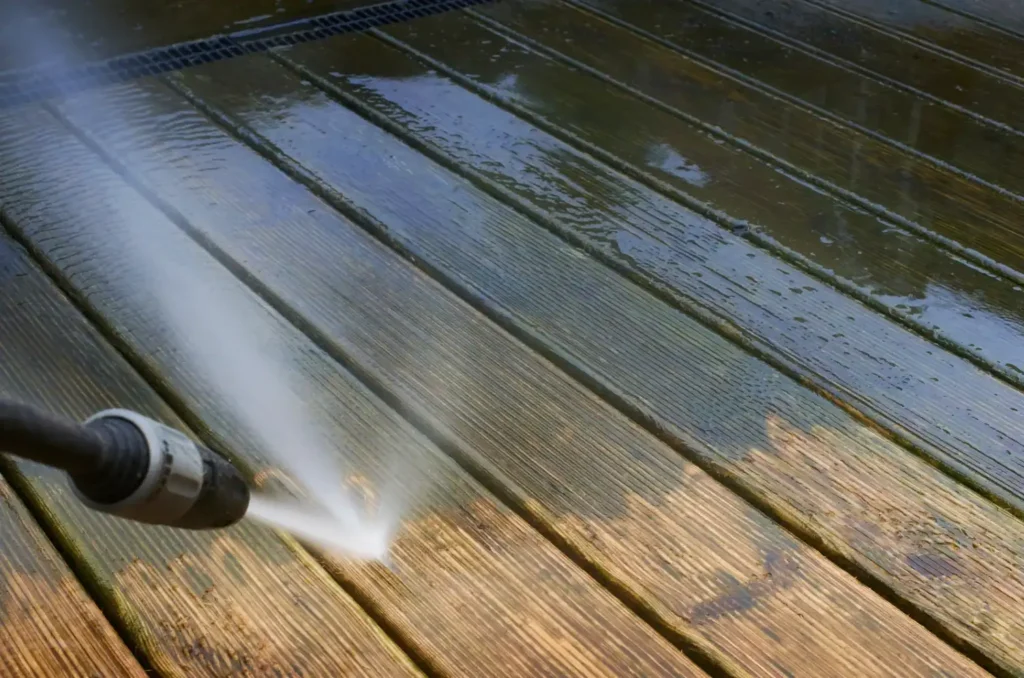
- Pressure matters: Too little pressure won’t dislodge established growth; too much can damage shingles, strip siding paint, or etch concrete
- Chemical treatment: Effective algae and mildew removal often requires a soft-wash solution that kills the growth at the root rather than just blasting it off the surface — otherwise it returns within weeks
- Coverage: A homeowner with a consumer-grade pressure washer may spend an entire weekend on a job a professional crew completes in a few hours — with better, longer-lasting results
What to Do Right Now
If you haven’t had your home’s exterior cleaned since last fall or winter, spring is the time to act — before the heat of summer bakes biological growth deeper into your surfaces and makes it significantly harder to remove.
Here’s a quick action checklist:
- ✅ Walk your property and look for green, black, or gray patches on any exterior surface
- ✅ Check your roof from the ground for streaking or discoloration
- ✅ Test your walkways and deck surface for a slippery biofilm
- ✅ Look at the north-facing and shaded sides of your home first — those are almost always the worst
- ✅ Schedule a professional pressure washing before the heat of June arrives
[How pressure cleaning protects your home](link to How Pressure Cleaning Can Protect Your Home post) goes beyond looks — it’s routine maintenance that extends the life of every surface on your property.
Serving Chapel Hill and the Triangle This Spring
At Greg Tilley’s Pressure Cleaning, we specialize in safe, effective algae and mildew removal for homes throughout Chapel Hill, Carrboro, Durham, and the surrounding Triangle area. Our soft-wash and pressure washing services are tailored to your home’s specific surfaces and growth type.
Don’t let spring growth get a head start. Contact us today to schedule your spring exterior cleaning.